
The Urban Systems Engineering Lab (USE-Lab) aims to develop a people-centric, quantitative, and predictive understanding of the bottom-up organization of cities and use these insights to improve the efficiency and resilience of urban infrastructures. To that end, we apply and further develop computational tools from Urban Analytics, AI, and Complexity Science.
News
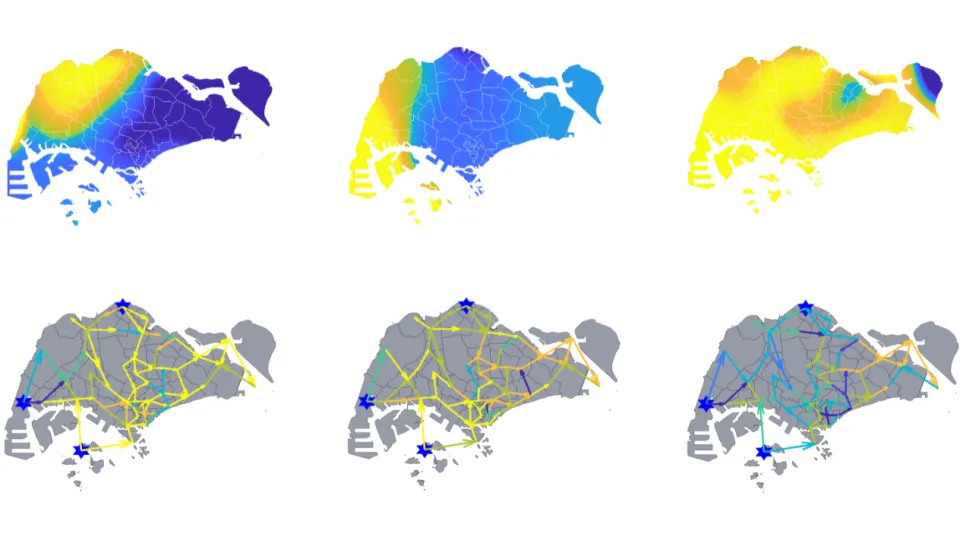
Using optimal transport theory and mobility data from Singapore’s MRT system, we show that urban travel patterns are shaped more by the collective decisions of travelers than by centrally optimized routing, emphasizing the role of self-organization in the design of efficient and people-centric transit systems.
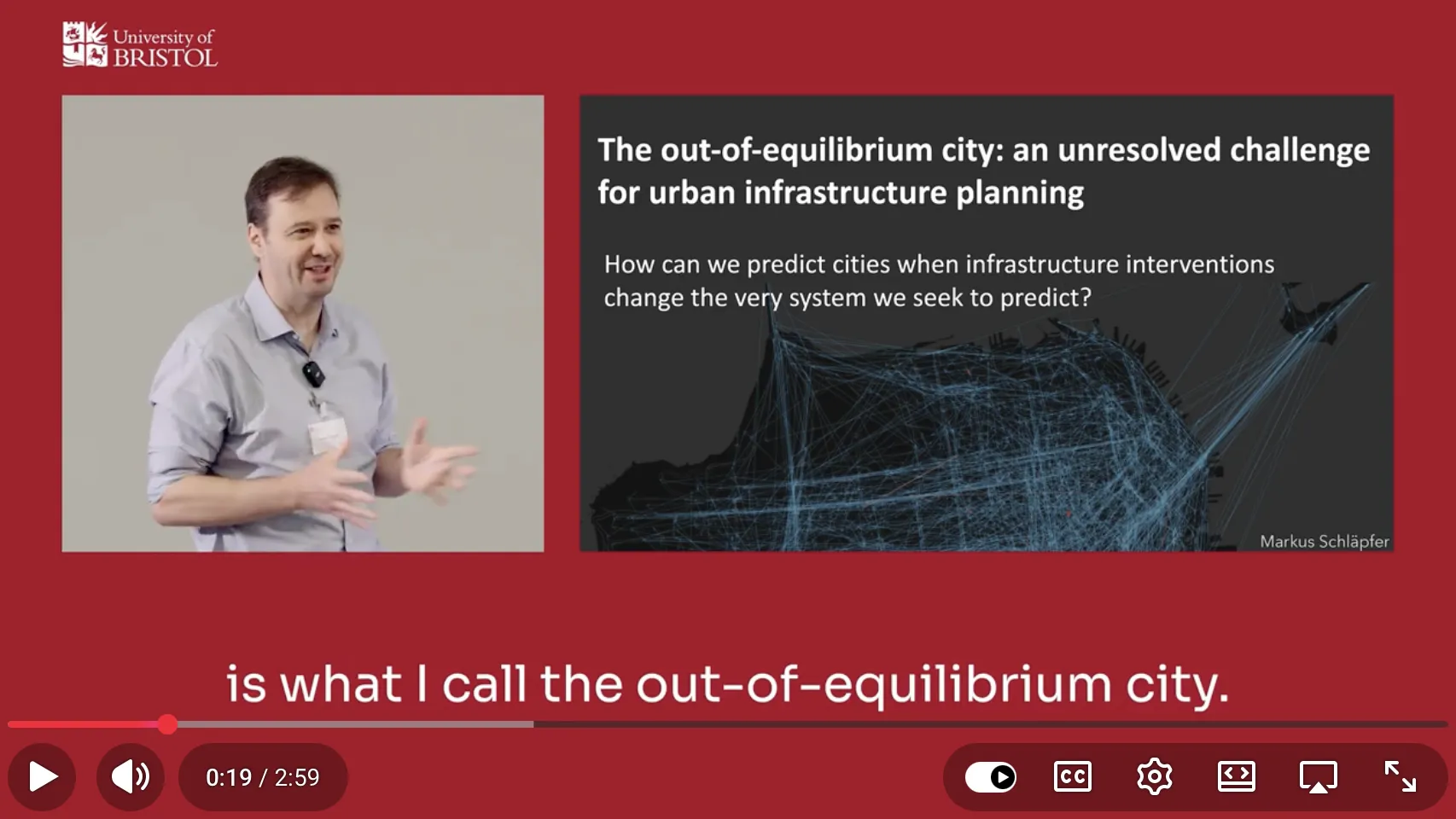
Markus Schläpfer introduced the Out-of-Equilibrium City — the problem that our predictions of urban life rest on observing cities as they are, while the infrastructure decisions that matter most are the ones that deliberately change them.
Our recent paper in Nature Communications on electric vehicle charging and photovoltaic integration in tropical cities was featured by Columbia Engineering. The study shows how decentralized charging strategies can substantially increase the amount of solar energy that cities can integrate while reducing stress on the electrical grid.
Read the Columbia Engineering feature
Read the Nature Communications paper